

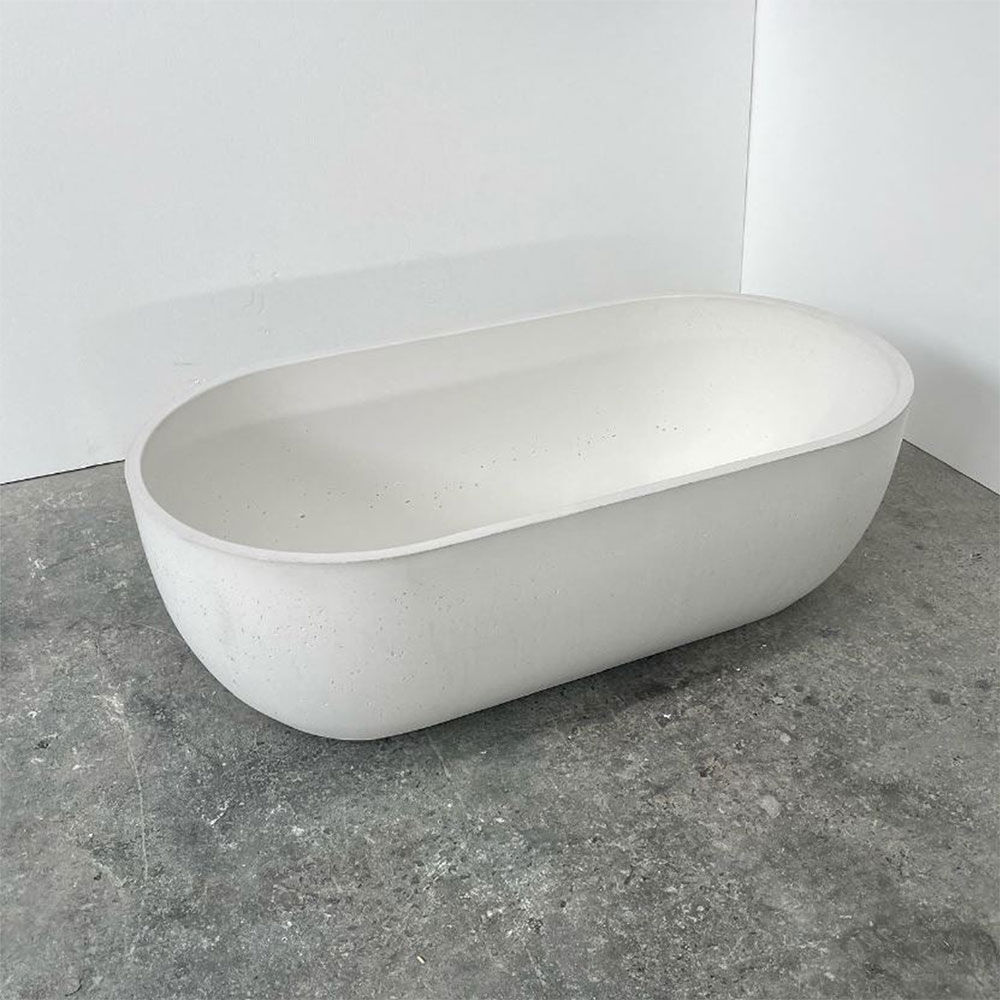
1. Heavy and Difficult to Install
One of the biggest challenges with a concrete freestanding tub is its weight. Concrete is extremely dense, often requiring:
-
Reinforced flooring to support the load (especially in upper-story bathrooms).
-
Professional installation, as moving and positioning the tub may require special equipment.
-
Potential structural modifications if your bathroom wasn’t originally designed for such heavy fixtures.
2. High Maintenance and Sealing Requirements
Unlike acrylic or porcelain tubs, concrete is porous and requires regular sealing to prevent:
-
Water absorption, which can lead to cracks over time.
-
Staining from soap, minerals, and bath products.
-
Mold and mildew growth if not properly sealed and dried.
Homeowners must reapply a high-quality sealer every 1–2 years to maintain durability.
3. Prone to Cracking and Chipping
While concrete is strong, it’s also brittle. Common issues include:
-
Hairline cracks from settling or temperature changes.
-
Surface chips if heavy objects are dropped inside.
-
Long-term wear in high-traffic bathrooms.
Repairs can be costly and may require professional refinishing.
4. Cold and Uncomfortable Without Insulation
Concrete doesn’t retain heat well, meaning:
-
The tub will feel cold to the touch unless pre-warmed.
-
Bathwater cools faster than in acrylic or cast iron tubs.
Some homeowners add insulation layers or heated towel racks to compensate.
5. Expensive Compared to Other Materials
A concrete freestanding tub is a luxury item with costs including:
-
Higher upfront price (3,000–10,000+ depending on customization).
-
Installation fees (due to weight and complexity).
-
Ongoing maintenance (sealers, repairs).
For budget-conscious buyers, alternatives like acrylic or steel may be more practical.
6. Limited Design Flexibility After Installation
Unlike lighter tubs, concrete models are:
-
Nearly impossible to move once installed.
-
Hard to modify (e.g., adding jets or built-in shelves later).
-
Custom shapes may complicate bathroom renovations down the line.
Is a Concrete Bathtub Right for You?
While a concrete freestanding tub offers a unique, high-end look, its drawbacks—weight, maintenance, cost, and temperature issues—make it a significant commitment. If you love the aesthetic and are willing to invest in upkeep, it can be a stunning centerpiece. However, if you prefer low-maintenance, budget-friendly, or warmer bathing experiences, other materials may be a better fit.
Would you like recommendations for alternative freestanding tub materials? I can provide comparisons to help you decide!